Do You Tip An Airport Shuttle Driver In Auckland?
A plain answer to the tipping question for Auckland Airport shuttle riders, with what the fare covers, when a tip makes sense, and how cash, cards and apps change the moment.
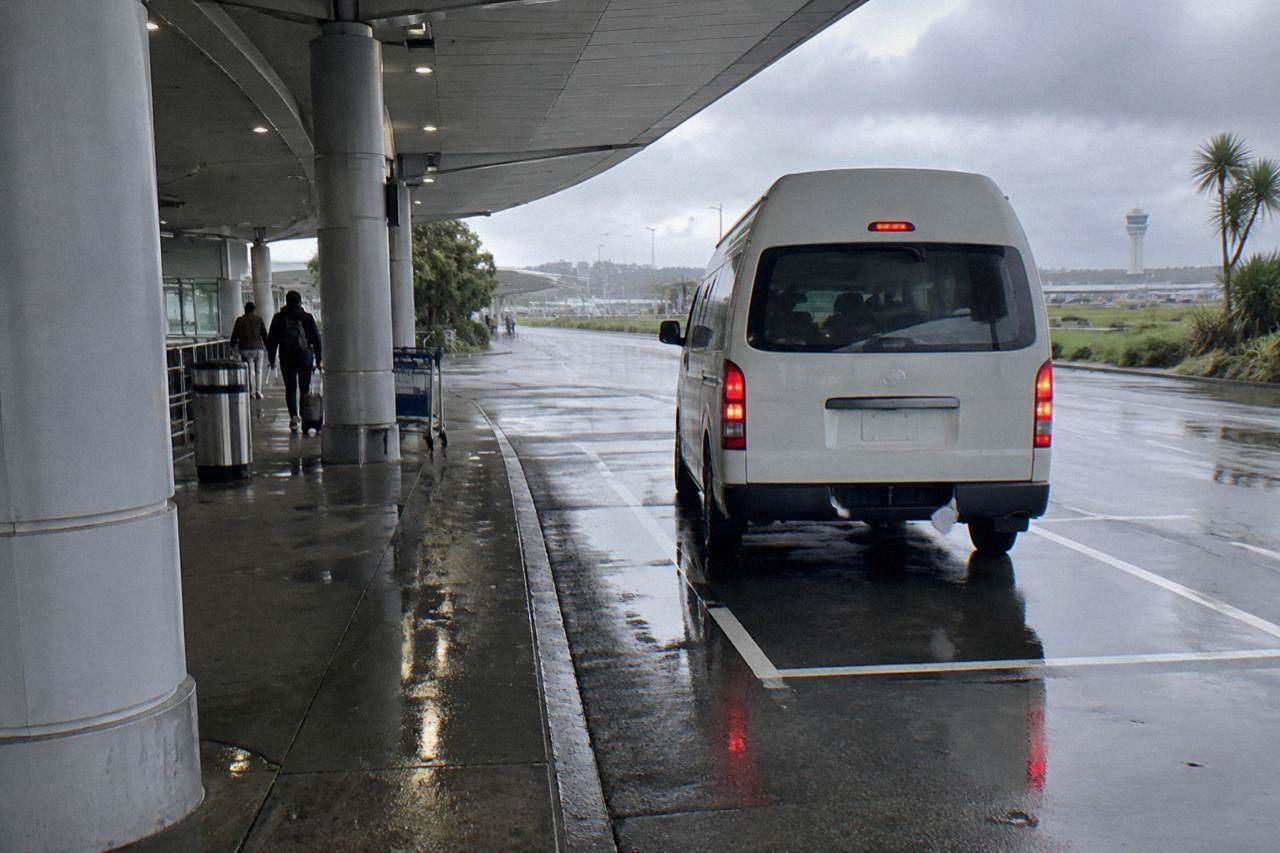
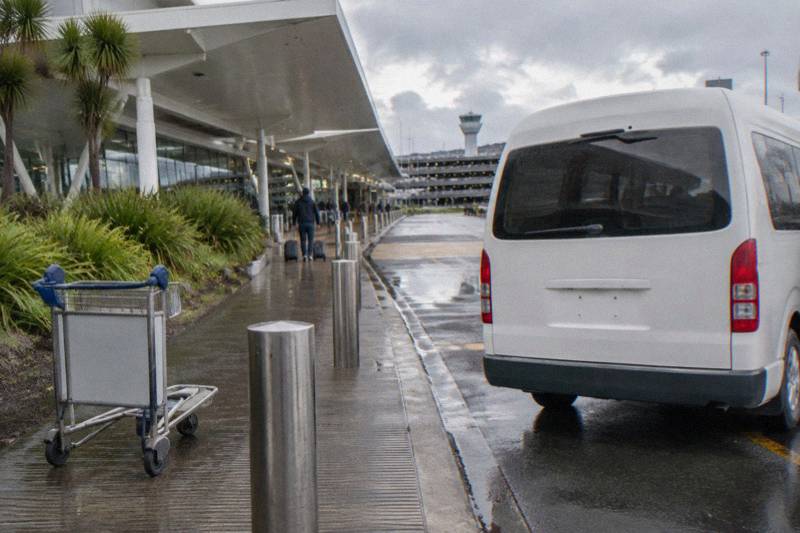
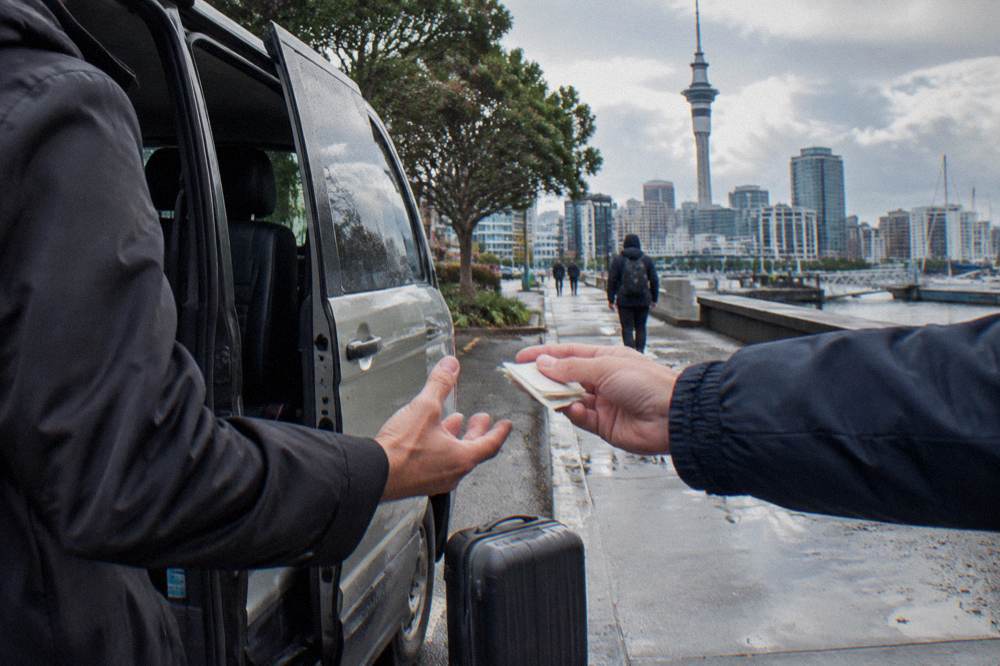
No, tipping is not expected. New Zealand has no tipping culture, wages are not structured around gratuities, and an airport shuttle driver in Auckland will not be waiting for extra money at the end of the ride. If the driver handles heavy bags, waits patiently after a delayed flight, or helps with a child and a stroller at the kerb, many riders round up or hand over a few dollars, always as a thank you rather than an obligation.
That single answer covers most situations, but the question keeps coming up for a reason. Travellers arriving in Auckland often land from tipping economies, and the anxiety is real: nobody wants to be the visitor who stiffed a driver in a country where it turned out to matter. The good news is that in New Zealand it does not matter in that way. Service workers, including shuttle and transfer drivers, are paid a wage by law, and prices you see are prices you pay. There is no line on a receipt marked gratuity, no expectation of a percentage, and no awkward pause at the door while the driver waits.
“It was a giant relief after a 12-hour flight to see a friendly person holding a screen with my name making for an easy transition to the hotel.”
The honest framing is this: a tip in Auckland is a gift, not a norm. It flows from something specific that happened during the ride, not from the ride simply taking place. A shared shuttle from the airport to the city is a booked, pre-paid product. The driver's job is to collect you from the right zone, load the bags, and get the vehicle downtown. Doing that job well is what the fare funds. Where the question gets interesting, and where this page spends its time, is the grey band around that baseline: luggage carried up stairs, a name sign at arrivals after a two hour delay, a child seat fitted in the rain.
This page also covers the practical mechanics that trip people up. Do you hand over cash, and is it New Zealand dollars or your own? Does the app you booked through have a tip button, and does the driver see that money? What happens at the airport pickup zones when you are juggling bags and trying to find your vehicle? And how does the answer change between a $22 shared seat and a private transfer where the driver has waited with a name board? Each of those gets its own section below, anchored to how Auckland Airport transfers actually work.
If you are still deciding what kind of ride to book, consider the South Auckland Shuttles shared shuttle between the airport and CBD hotels, from $22 per person, rated 4.6 across 1,554 reviews. It is a good worked example throughout this page because it is the most reviewed transfer of any kind available for the airport run, and its terms, free cancellation up to 24 hours in advance, luggage carriers fitted, both directions covered, tell you a lot about what the fare already includes.
Is Tipping Expected In New Zealand At All?
No. New Zealand is one of the least tipping-oriented countries visitors from North America will encounter. Workers must be paid at least the minimum wage by law, hospitality and transport prices are not subsidised by gratuities, and nobody will chase you for leaving nothing. Taxi and shuttle meters, app fares and pre-booked transfer prices are complete amounts. A tip is read as a personal thank you for unusually good service, full stop.
The contrast matters because behaviour imported from home can create confusion rather than goodwill. In cities like New York or Toronto, a shuttle driver's income depends on tips, and leaving nothing is a statement. In Auckland the same gesture means nothing at all about the service, because the economics underneath the ride are different. The driver of a shared shuttle or a private transfer is paid by the operator, and the price printed at booking is what the operator receives for the ride. There is no social script that a driver performs in order to unlock 15 or 20 percent at the end.
Where visitors do see tipping in New Zealand, it is narrow and low-stakes. Some restaurants leave a tip line on the EFTPOS machine, and leaving a small amount is fine if the meal was excellent, but locals routinely press zero without a second thought. Tour guides on multi-day trips sometimes receive a token from the group at the end. Hotel porters, hairdressers, casino staff: all operate on the same principle of optional, occasional, modest. Nobody tips the supermarket checkout, the barista, the bus driver on the AirportLink, or the SkyDrive express into town, and a shuttle driver sits firmly in that same cultural bracket, with the small caveat that luggage handling can push a ride into gift territory.
“Good, respectful, freindly and timely service. The vehicle was clean and very comfortable. I highly recommend this as a hassle free way to transfer from the airport.”
There is also a practical limit worth naming. Because tipping is not the norm, drivers do not carry the reflex of refusing a tip twice before accepting, and there is no script for it. If you hand over cash and say thanks, the most likely responses are a simple thank you back and a slightly surprised smile. It will not make the news and it will not be expected next week. If you leave nothing, nothing happens. That asymmetry is the whole answer in miniature, and it is why the rest of this page is about judgement calls rather than obligation.
One more framing helps. A pre-booked transfer is closer to a bus ticket than to a restaurant meal. You paid a company, the company dispatched a driver, and the transaction closed when the booking confirmed. The person behind the wheel is the face of a completed purchase, not a contractor waiting on your appraisal. Keeping that picture in mind makes the tipping decision almost trivially easy, and it also explains why the genuinely common gesture among locals is nothing at all.
What Does The Fare Already Cover On An Auckland Shuttle?
The fare covers the ride and the standard service around it: pickup from the correct zone, your seat or your vehicle, luggage carriage, and drop-off inside the product's stated area. On the featured shared shuttle, luggage carriers are fitted and the driver meets you outside your accommodation or at your terminal, with flight monitoring stated on the booking page. Tipping, where it happens, pays for effort beyond that baseline, not for the baseline itself.
“This is a great service. It's a couple of hundred yards from the terminal and then door-to-door to the hotel. The driver was very helpful with our luggage and did an excellent job bringing us to our place.”
Reading what a fare includes is the step most riders skip, and it is the step that answers most of the tipping question before it is asked. Take the two shared products available for the airport to city run. The South Auckland Shuttles shared shuttle runs from $22 per person and states a meet and greet, flight monitoring, both directions, an air-conditioned minivan or coach, and luggage carriers fitted, with oversized items like surfboards, golf clubs and bikes possibly restricted and worth raising with the operator first. The Super Shuttle shared arrival transfer runs from $24.08 per person, caps the vehicle at 11 passengers, allows two checked bags plus one piece of hand luggage per traveller, and collects from the Super Shuttle rank outside the arrivals hall. Every one of those items is inside the price. Handing the driver extra for loading two standard suitcases is paying twice for something already included.
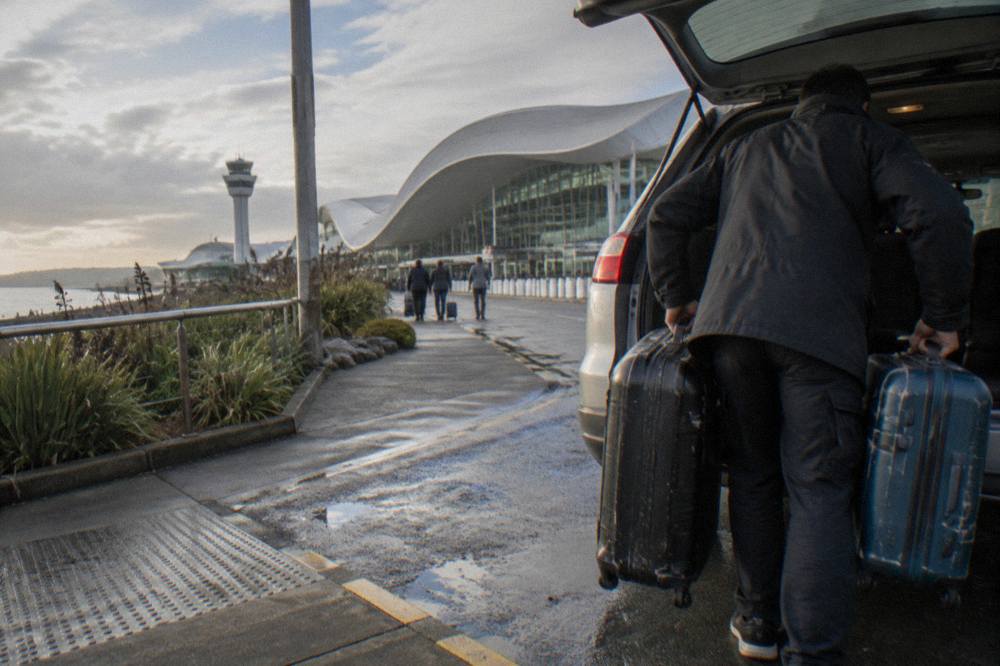
The clean way to hold this in your head is a short mental ledger: what the fare buys, what costs extra regardless of tips, and what earns a gift. The middle column is real on these products. Excess luggage charges sit outside the Super Shuttle fare. A mobility scooter, surfboard or bike adds a $5 charge on the HOPinCAB private minivan. Outside-zone drop-offs on the Super Shuttle product cost extra. Child seats are their own category: the Super Shuttle booking page recommends bringing your own, with infants on laps, while the Namaste private transfer confirms them in advance and Flylink adds a charge for infant seats. None of those extras are tips, and a tip does not offset them. Pay the stated charge, then decide about the gift separately.
| Product | Fare basis | What the fare already includes | Stated extras |
|---|---|---|---|
| South Auckland Shuttles shared shuttle | From $22 per person | Meet and greet, flight monitoring, luggage carriers, both directions | Oversized luggage possibly restricted, ask first |
| Super Shuttle shared arrival transfer | From $24.08 per person | Seat in an 11-passenger vehicle, two bags plus hand luggage, rank pickup | Excess luggage charges, out-of-zone drop-offs |
| Elife Ride private transfer | From $26 per person | Private vehicle up to 10 passengers, 60 minutes of airport pickup waiting time | Other locations outside the city centre cost extra |
Notice how much sits in the third row's included column. The Elife Ride product, though priced per person, is a private transfer with a fleet that scales from a sedan to a minibus, and it states 60 minutes of free waiting time at the airport pickup. That hour is in the fare. A driver who waits through a long flight delay inside that window is doing exactly what was purchased, which is worth remembering before reaching for the wallet. The moment that earns something extra is the moment a driver does more than the purchased scope: carrying bags up a flight of stairs at an old CBD hotel, re-fitting a child seat in a downpour, or detouring politely to a second door because your entrance has stairs. Those are gifts of effort, and they are the only reliable trigger for a tip on this route.
If you are leaning toward the shared option for your own trip, the airport shuttle guide breaks down the shared products in more depth, and the featured shuttle below is the one this page keeps returning to because of its review pool and its terms. Free cancellation up to 24 hours in advance means the tipping question can be settled after you have seen the service, not before.
Shared Shuttle Or Private Transfer: Does The Ride Change The Tipping Question?
It changes the shape of the moment, not the obligation. A shared shuttle is a short, functional encounter: one seat, one bag drop, one goodbye at a CBD hotel door, and tipping stays rare. A private transfer is a longer one-on-one service with a driver, luggage handled door to door, and often a name board at arrivals, which is where riders more often feel the pull to give something. The norm itself does not move.
The shared shuttle experience compresses the driver relationship into minutes. On the Super Shuttle arrival transfer you board at the rank outside arrivals, the driver stacks the bags, and up to 11 passengers ride into the city centre with drop-offs along the way. The featured South Auckland shared shuttle works the same social shape: meet at the terminal or outside your accommodation, load, ride, unload. In that format the driver is doing a repeated, efficient job, and the interaction is friendly but brisk. Almost nobody tips in this setting, and the driver is not counting.
The private transfer stretches the same encounter. The Shine Shuttle premium private transfer from the airport into the city, from $74.53 per vehicle for up to 5 passengers, rated 5.0 across 134 reviews, is one driver, one vehicle, one party, with a city drop-off at the end. The Namaste transfer states flight monitoring and includes two large suitcases plus two carry-ons. The Maxwell luxury transfer has the driver waiting past customs near the McDonald's inside the terminal holding a name sign. These are services built around a single party's comfort, and the natural human instinct at the end of a smooth private ride, especially after a long haul flight, is to offer something. That instinct is fine. It is still a gift.
Two cautions keep this honest. First, price basis matters when you are mentally bracketing the ride: the South Auckland private one-way transfer shows from $25.22 with no per person or per vehicle basis stated, so check the booking page before comparing it with anything, and never treat a per-vehicle fare like the HOPinCAB minivan at $61 for up to 4 as comparable per head. Second, the luxury bracket is not a tipping bracket. The Brightlane Mercedes-Benz transfer runs from $143.33 per vehicle for up to 2 passengers, and the Black Car Transfers sedan or van from $108.93 per vehicle. Paying more does not create an expectation any more than paying less removes one. If anything, the chauffeur segment prices the premium service fully into the fare, and the professional stance of those operators makes a tip the least expected of anywhere on this list.
For readers still choosing, the comparison piece on shared versus private airport transfers works through cost and comfort without the tipping lens. The short version as it interacts with this page: choose the format for the ride, not for the tipping etiquette, because the etiquette does not change.
What About Luggage Help And Meet And Greet Moments?
Luggage and greeting are where tipping actually happens in Auckland, because they are the visible, physical extras. A driver who carries bags to the vehicle, then from the vehicle to your hotel door, or who waits inside arrivals holding a name sign after a delayed landing, has done something you can point at. Standard loading of included luggage does not cross that line. Stairs, heavy items, second trips and patient waiting are the moments riders reward.
Start with the baseline so the line stays clear. On the featured shared shuttle, luggage carriers are fitted, which means the driver lifts your standard checked bags into the carrier as part of the job. On the Super Shuttle product, two checked bags plus one hand luggage per traveller are inside the fare. On the private side, the Airporter transfer states help with luggage to the vehicle, and the Airporter Hamilton regional transfer states the same. If a bag goes from kerb to carrier to kerb, the fare has already paid for that, and no gift is owed. The wider set of guides lives on Auckland Airport Transfer.
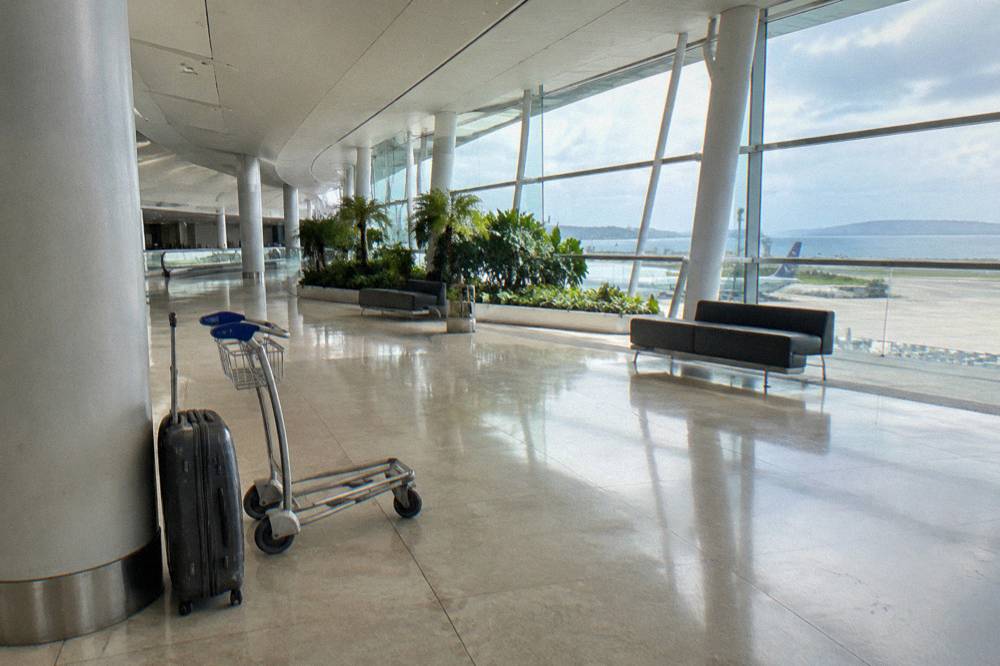
Now the genuine extras. Many CBD hotels are older buildings with steps, narrow lobbies and no kerbside loading. If a driver parks, walks bags inside to the reception desk, and makes two trips to do it, that is effort beyond the fare on every product here. If you are travelling with a bicycle or golf clubs and the operator has agreed to carry them, the roping and re-roping of the luggage bay is the same category. The greeting side has its own versions: the Shiv Om transfer has the driver waiting in front of the Spark NZ store with a name board for international arrivals, or at the meet and greet area near the Dunkin shop for domestic flights, and the Maxwell driver waits past customs with a name sign. When a driver is still waiting after a late-night arrival, calm and ready, a surprising number of riders reach for a note. That reaction makes cultural sense even in a non-tipping country, because the gift is recognising a person, not paying a wage.
“Everything was excellent! Prompt pickup, smiles and clean vehicle. Arrived with some basic knowledge of the area and recommendations for restaurants and things to do near hotel.”
Child seats belong in this conversation too, because they generate the same felt-debt. Fitting an infant seat correctly takes several minutes, and on products where seats are available, HOPinCAB and NZ Black Cars state infant seats available, Flylink provides them on request with a charge, Airporter and Namaste handle them on request, a driver who installs and checks the seat without being asked has done a real service for a family's peace of mind. The mechanics of giving are covered two sections down, but the trigger belongs here: physical, specific, slightly beyond the job.
The pickup-zone end of the ride has its own etiquette that is not about money at all. Off-site shuttles collect from the Off-site Transfer zone, lanes 1 and 2, north of the Transport Hub behind the Te Arikinui Pullman hotel, a 5 to 7 minute walk under a mostly covered canopy, while premium pre-booked services may use the Priority zone or kerbside VIP spaces, and the airport's own advice is to check with your provider which zone you will be collected from, then follow the signs and the driver's instructions. If you arrive at the zone flustered, the best currency is attention: be there, be visible, have your bags ready. That is the greeting the driver actually wants, tip or no tip.
How Much Do People Round Up On An Airport Shuttle?
There is no standard amount, because there is no standard practice. The gestures that do occur are small and round: adding a couple of dollars to a shared shuttle, rounding a fare up to the nearest convenient note, or handing over a few dollars per party on a private transfer where the driver handled a lot. Nobody computes a percentage in New Zealand, and a large tip on an airport ride would read as unusually generous rather than normal.
Because no official or industry figure governs this, the honest way to present it is as ranges of behaviour, not rules. The featured shared shuttle costs $22 per person, and any tip, where one is given, is an extra on top of that fare, not part of it. On private transfers, where the driver has been with one party for the whole run, a few dollars per passenger is a defensible ceiling for an exceptional ride, and a round-up gesture the common floor. Anything framed as a percentage of the fare imports a foreign norm. New Zealand's goods and services are quoted fully, tips are top-ups, and top-ups are absolute amounts, not fractions.
| Situation | Common local behaviour | Fair reading |
|---|---|---|
| Smooth shared shuttle ride, bags loaded normally | No tip | The fare covered it |
| Driver carries bags inside a hotel with stairs | A few dollars in cash | Recognition of real extra effort |
| Driver waits patiently through a long flight delay | Round up or a small note | Especially on pre-booked private runs |
| Child seat fitted and checked without prompting | A few dollars per family | Most tempting moment for travelling parents |
| Luxury chauffeur transfer, premium service as booked | No tip expected | Premium service is priced into the fare |
Two things should not influence the amount. First, guilt about currency: handing over a few US dollars or euros because that is what is in your pocket is accepted graciously and never converted or commented on. Second, comparison with the taxi alternative. The airport lists an indicative taxi fare of NZ$38 to NZ$105 one way to the city, and riders sometimes tip taxi drivers a little on the generous end of that range out of habit. That is a different product with its own habits, and importing it into a $22 pre-booked shuttle seat is how visitors over-tip in non-tipping countries. The cheapest honest policy is to let the effort, not the comparison, set the amount.
One final calibration point: silence is free. If you finish the ride, say thank you, take your bags and walk into the hotel, you have done everything Auckland expects of you. The driver will not remember it as a slight by dinner. The rounding-up gestures described here are the visible minority of rides, not the invisible majority, and no driver's week is built on them.
“Gary, our driver, was very professional and made our transfer from airport to hotel very easy. We would definitely book with this firm again.”
Do You Tip In Cash Or Through A Booking App?
Cash is king for tips in Auckland, and cash in any widely traded currency is graciously accepted. Booking apps for these transfers do not universally expose a tip function to the driver the way rideshare apps do, so never assume an in-app button reaches the person who drove you. If you want the driver to receive your thanks in full, hand it to them directly at drop-off, in notes, and say what it is for.
The mechanics deserve their own section because the app era has quietly broken the old physical ritual. Uber, Bolt and DiDi all serve Auckland Airport from signposted zones: Uber has its own pick-up zone at each terminal, Bolt and DiDi share a separate rideshare zone, and drop-off areas are signposted at both terminals. Travellers arrive assuming every booked ride works that way. Pre-booked shuttle and transfer products generally do not. The operator sets the price, and payment goes through the booking page or the operator. If you see a tip field at checkout, do not assume an in-app tip reaches the driver.
New Zealand dollar cash is the safe answer. New Zealand dollars are ideal. New Zealand dollars are the notes to have ready for a gift. The etiquette of handing it over is refreshingly simple: do it at the end of the ride, at the door, with a sentence. Something as plain as "thanks for waiting, get yourself a coffee" does the whole job. The sentence matters more than the money, because it tells the driver this is a personal thank you and not a misunderstanding about the fare.
One wrinkle worth flagging: the payment moment on a shared shuttle is often nothing at all, because you pre-paid. That can make the end of the ride feel transactionally unfinished, like walking out of a restaurant without the bill. Resist the urge to fill the silence with money. The ride was paid for when you booked, the driver knows that, and the goodbye is just a goodbye. If the driver did something worth recognising, the cash note ritual from the paragraph above is the whole ceremony Auckland requires, and it takes under ten seconds.
Who Are The Drivers On Auckland Airport Shuttles?
They are employed or contracted drivers working for licensed New Zealand operators, paid wages rather than gratuities, and the airport states that only licensed companies may pick up from the designated taxi ranks.
This background is not decoration; it is the reason the tipping answer is a flat no. A driver whose income is a wage does not need a tip to reach a living, and a system that pays wages does not generate the social pressure that makes tipping feel mandatory elsewhere. The operators visible on the airport route make this concrete. South Auckland Shuttles and Tour runs both the featured shared shuttle and its private counterpart, the same operator wearing two hats. Shine Shuttle, HOPinCAB, Kiwi Driver Tours, Flylink Services, Namaste Airport Transfers, Shiv Om Tour and Travels, NZ Black Cars, Airporter, Elife Ride, Maxwell, Black Car Transfers and Brightlane, and Elite Ride New Zealand round out the field, each running its own fleet and drivers.
The airport layer sits on top. Auckland Airport states plainly that only licensed companies are able to pick up from the designated taxi ranks, while any company can drop off, and its transport pages direct pre-booked passengers to the correct collection zone for their service type, from the airport's own transport page. That licensing structure is why an unlicensed kerbside approach is not a thing at this airport: your driver is a known, badged individual dispatched by a company that has the right to trade there. It also explains the meet points. Pre-booked taxis meet inside arrivals per the airport, premium services may use the Priority zone or kerbside VIP spaces, and off-site shuttles use the lanes behind the Pullman.
For a rider, the useful empathy is this: your driver spends much of a shift wrestling other people's luggage in a queue of buses and coaches. The behaviours that earn goodwill are the small human ones, being ready at the zone, keeping the aisle clear, giving the postcode or hotel name crisply. Tipping is only one of the currencies of a good transfer, and in Auckland it is the least expected of them. If you want the fuller picture of how the whole pickup choreography works, how airport transfers work in Auckland walks the end-to-end sequence from booking to drop-off.
When Is A Tip Genuinely Warranted On An Auckland Transfer?
A tip is warranted when the driver personally absorbed a cost or made an effort the fare never purchased: waiting well beyond any stated waiting time, carrying bags up stairs, fitting a child seat unprompted, or solving a problem like a wrong address with patience. It is not warranted for punctual pickup, safe driving or friendly chat, because those are the product. Ask one question: did the driver give time or effort that was not on the ticket?
Running the rule against real situations from this route sharpens it. A delayed international arrival where the driver of a pre-booked private transfer waits past the 60 minutes Elife Ride includes, with no stated overtime charge, sits on the warranted side. A family with two children where the HOPinCAB driver installs infant seats and re-checks the straps is on the warranted side. Now the other side: the shared shuttle that arrives on time, loads bags into the carrier and drops you at your hotel door has delivered the product exactly, and the correct response is a warm thank you. Both rides were good. Only one contained a gift.
The grey cases deserve honesty rather than false precision. Weather is the common one: a driver loading luggage in horizontal rain did not do more work, but many riders feel the pull anyway, and a small note is a kind gesture rather than a wrong one. Language help, directions, a restaurant recommendation, a detour to a pharmacy on the way into the city: these are courtesies, and Aucklanders give and receive them without money changing hands. If you are unsure, err toward nothing plus genuine thanks, which is the local default and cannot offend. The failure mode this page exists to prevent is the opposite: the anxious visitor tipping 20 percent on a $22 shuttle seat because that is the habit from home, and quietly overpaying for a service that was already complete.
Two booking-side cautions finish the picture. Cancellation generosity flows one way: every product compared here states free cancellation 24 hours or more ahead, but inside that window most refunds vanish, so do not read a tip as insurance against your own late change of plans. And if you are booking the private alternative rather than a shared seat, the private transfer guide at booking a private Auckland Airport transfer sets out the price ladder, from the Airporter transfer at $41.95 per vehicle for up to 2 through the luxury tier topped by the Brightlane Mercedes-Benz transfer at $143.33 per vehicle. Whatever you book, the tip decision happens at the door, after the service, with full information. That is exactly where it should stay.
Common Questions About Tipping Auckland Airport Shuttle Drivers
Do You Tip An Airport Shuttle Driver In Auckland?
No. Tipping is not expected anywhere in New Zealand's transport sector, and shuttle drivers are paid wages rather than gratuities. A small cash thank you for exceptional help, like carrying bags upstairs, is welcomed but entirely optional.
Is Tipping Expected In New Zealand At All?
No. New Zealand is not a tipping culture. Restaurant tips are occasional and small, and there is no percentage norm for transport, hospitality or guiding services. Locals routinely leave nothing and no one takes offence.
How Much Should I Tip A Private Transfer Driver In Auckland?
There is no standard. If a driver did something beyond the booked service, a few dollars per person or a rounded-up fare is one way to recognise it. Nothing is also a complete answer, even on luxury transfers where premium service is priced into the fare.
Can I Tip Through The Booking App?
Do not assume an in-app tip reaches the driver. Pre-booked transfer products do not all expose a tip function, and where a field exists it may be an operator-level setting. Cash handed directly to the driver at drop-off is the reliable way.
Should I Tip In New Zealand Dollars?
New Zealand dollars are ideal, but drivers graciously accept other currencies. Any small note, handed with a thank you at the door, works as a gesture.
Does The Driver Expect A Tip For Loading Luggage?
No. Luggage carriage is inside the fare on these products: the featured shared shuttle fits luggage carriers, and the Super Shuttle transfer includes two checked bags plus hand luggage per traveller. Extra physical effort beyond that, such as carrying bags up hotel stairs, is what occasionally earns a small gift.